7 Types of Online Earning Platforms Beginners Can Use
Introduction
Many beginners want to earn online, but they do not know where to start. Some people search for earning apps, some create freelancing accounts without a skill, and some watch random videos without a clear plan.
The truth is simple: online earning becomes easier when you choose the right platform and learn the right skill.
If you are searching for online earning platforms, this guide will help you understand different types of platforms beginners can use. These platforms can help you find clients, sell services, build stores, create content, sell products, or promote your skills online.
But remember one thing: a platform alone will not make you money. You need skill, practice, portfolio, and consistency.
What Are Online Earning Platforms?
Online earning platforms are websites, apps, or online systems where people can earn money by offering skills, selling products, creating content, or working with clients.
For example, a freelancer can use Upwork or Fiverr to find clients. Upwork describes itself as a global platform that connects freelancers and clients, while Fiverr explains that it is a marketplace where clients can find freelancers for digital services.
In simple words, online earning platforms connect people who need work with people who can do that work.
Why Beginners Should Choose the Right Platform
Choosing the wrong platform can waste your time. Many beginners create accounts on every website but do not know what service to offer.
A good platform should match your skill and goal.
For example:
- If you want client work, use freelancing platforms.
- If you want to sell products, use ecommerce platforms.
- If you want to create videos, use content platforms.
- If you want to find business clients, use social media platforms.
- If you want remote jobs, use job platforms.
The right platform gives you direction. The wrong platform creates confusion.
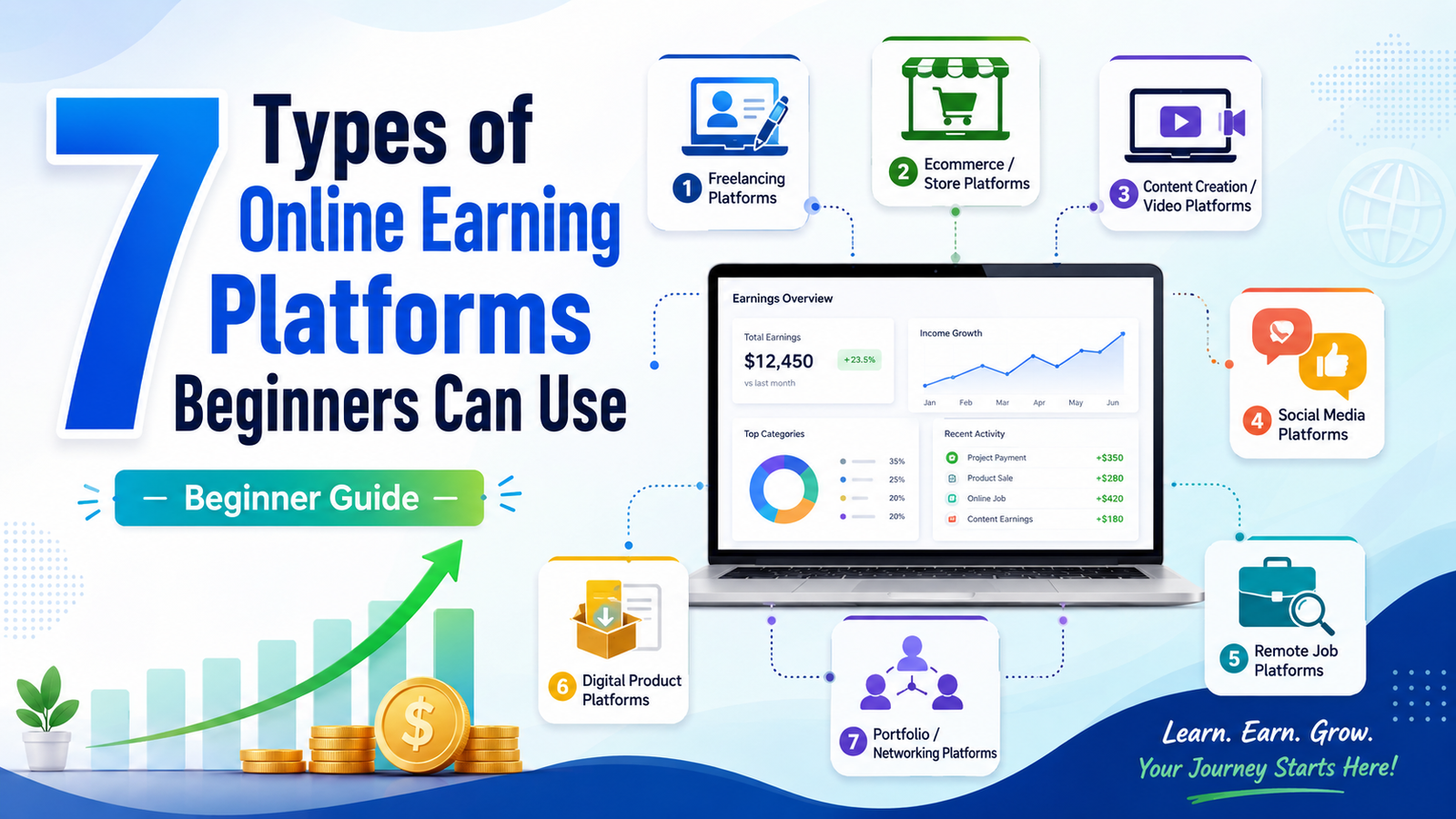
7 Types of Online Earning Platforms Beginners Can Use
Here are the 7 useful types of online earning platforms for beginners.
1. Freelancing Platforms
Freelancing platforms help you sell your skill as a service. Clients post work, freelancers offer services, and the platform helps connect both sides.
Popular freelancing platforms include:
- Fiverr
- Upwork
- Freelancer
- PeoplePerHour
You can sell services like:
- Shopify store development
- Paid ads
- Canva designing
- Content writing
- Video editing
- Social media management
- Virtual assistant services
Freelancing platforms are good for beginners who want to work with clients and earn through projects.
2. Ecommerce Platforms
Ecommerce platforms help you create online stores and sell products online.
Shopify is one popular ecommerce platform. Shopify’s help center explains that a Shopify online store works as the online home for a business.
With ecommerce platforms, you can sell:
- Physical products
- Digital products
- Local products
- Branded products
- Dropshipping products
- Handmade items
For beginners, Shopify is also useful as a skill. You do not need to start your own store first. You can learn Shopify and build stores for clients.
3. Content Creation Platforms
Content creation platforms help you earn by creating videos, posts, blogs, or educational content.
Examples include:
- YouTube
- TikTok
- Blogs
YouTube’s help center explains that creators can apply for the YouTube Partner Program and may access monetization features after acceptance.
Content creation takes time, but it can build long-term earning opportunities through ads, sponsorships, affiliate marketing, courses, and services.
This is good for people who like teaching, explaining, entertaining, or building a personal brand.
4. Social Media Platforms
Social media platforms are not only for entertainment. Beginners can use them to find clients, build trust, and promote services.
Useful platforms include:
- TikTok
- YouTube Shorts
For example, you can post your Shopify demo stores on Facebook groups. You can share paid ads tips on LinkedIn. You can create reels about online earning skills on Instagram.
Social media is powerful because it helps people know your skill before they hire you.
5. Remote Job Platforms
Remote job platforms help you find online jobs or part-time remote work.
You can search for jobs like:
- Virtual assistant
- Customer support
- Content writer
- Social media assistant
- Ecommerce assistant
- Shopify assistant
- Digital marketing assistant
This is useful for beginners who want more stable online work instead of project-based freelancing.
Before applying, create a simple CV, portfolio, and clear skill profile.
6. Digital Product Platforms
Digital product platforms help you sell products that do not need physical delivery.
Examples of digital products include:
- Ebooks
- Templates
- Online courses
- Canva templates
- Notion templates
- Checklists
- Paid guides
You can sell digital products through Shopify, your own website, or creator platforms.
This method is better after you have some skill or knowledge. For example, after learning Shopify, you can create a Shopify checklist or store setup template.
7. Portfolio and Networking Platforms
Portfolio platforms help you show your work to clients.
Examples include:
- Behance
- Google Drive
- Notion
- Personal website
- Canva PDF portfolio
A portfolio is very important because clients want proof.
Your portfolio can include:
- Demo Shopify store screenshots
- Paid ads campaign plans
- Canva designs
- Blog samples
- Video editing samples
- Social media content calendars
Even if you have no client, you can create sample projects and show them professionally.
Which Platform Should Beginners Start With?
For most beginners, the best starting platforms are freelancing platforms and social media platforms.
A simple path can be:
- Learn one skill
- Create sample work
- Build a portfolio
- Create profiles on Fiverr, Upwork, LinkedIn, and Facebook groups
- Start offering small services
If you like ecommerce, learn Shopify.
If you like marketing, learn paid ads.
If you like design, learn Canva.
If you like writing, learn content writing.
If you like videos, learn video editing.
Do not start with every platform at once. Start with one skill and two platforms.
Step-by-Step Roadmap to Start Online Earning
Step 1: Choose One Skill
Pick one skill based on your interest.
Step 2: Practice Daily
Watching videos is not enough. Build demo projects.
Step 3: Create a Portfolio
Show your work through screenshots, links, PDFs, or sample projects.
Step 4: Choose the Right Platform
Use freelancing platforms for clients, ecommerce platforms for stores, and social media for personal branding.
Step 5: Start Small
Your first goal should be experience, feedback, and confidence.
Common Mistakes Beginners Make
Avoid these mistakes:
1. Depending on Earning Apps
Most earning apps waste time. Focus on skills and real platforms.
2. Joining Too Many Platforms
Start with one or two platforms first.
3. No Skill
Platforms do not pay you. People pay you for your skill.
4. No Portfolio
Clients need proof. Create sample work before applying.
5. Giving Up Too Early
Online earning takes time. Learn, practice, improve, and stay consistent.
How Our Course Can Help You
Free videos can help, but many beginners feel confused because the information is scattered. One video teaches Shopify, another teaches paid ads, another teaches freelancing, and beginners do not know what to do first.
Our beginner-friendly online earning course helps you learn practical skills step by step.
Inside the course, you can learn:
- Shopify store development
- Paid ads
- Canva designing
- AI content creation
- Freelancing basics
- Portfolio building
- Client work guidance
The goal is to help you choose the right skill, build proof of work, and use online earning platforms with confidence.
Final Advice
There are many online earning platforms, but beginners should not depend on platforms only. First learn a skill, practice it, build a portfolio, and then use platforms to find clients or customers.
The best platforms are the ones that match your goal. Use freelancing platforms for client work, Shopify for ecommerce, YouTube for content, social media for branding, remote job platforms for online jobs, and portfolio platforms to show your work.
Start small, stay consistent, and focus on real skill-building.
FAQs
1. What are online earning platforms?
Online earning platforms are websites or apps where people can earn money by offering services, selling products, creating content, or finding online jobs.
2. Which online earning platform is best for beginners?
Fiverr, Upwork, LinkedIn, Facebook groups, YouTube, and Shopify can be useful for beginners, depending on their skill and goal.
3. Can students use online earning platforms?
Yes, students can use online earning platforms after learning a skill and creating a portfolio.
4. Do online earning platforms guarantee income?
No, platforms do not guarantee income. You need skill, practice, portfolio, communication, and consistency.
5. What skill should I learn before using online earning platforms?
Shopify, paid ads, Canva designing, content writing, video editing, and social media management are good beginner-friendly skills.
Tag:Online Earning

You may also like
5 Types of Freelancing Skills for Online Earning

Best Online Earning Ideas for Students in Pakistan