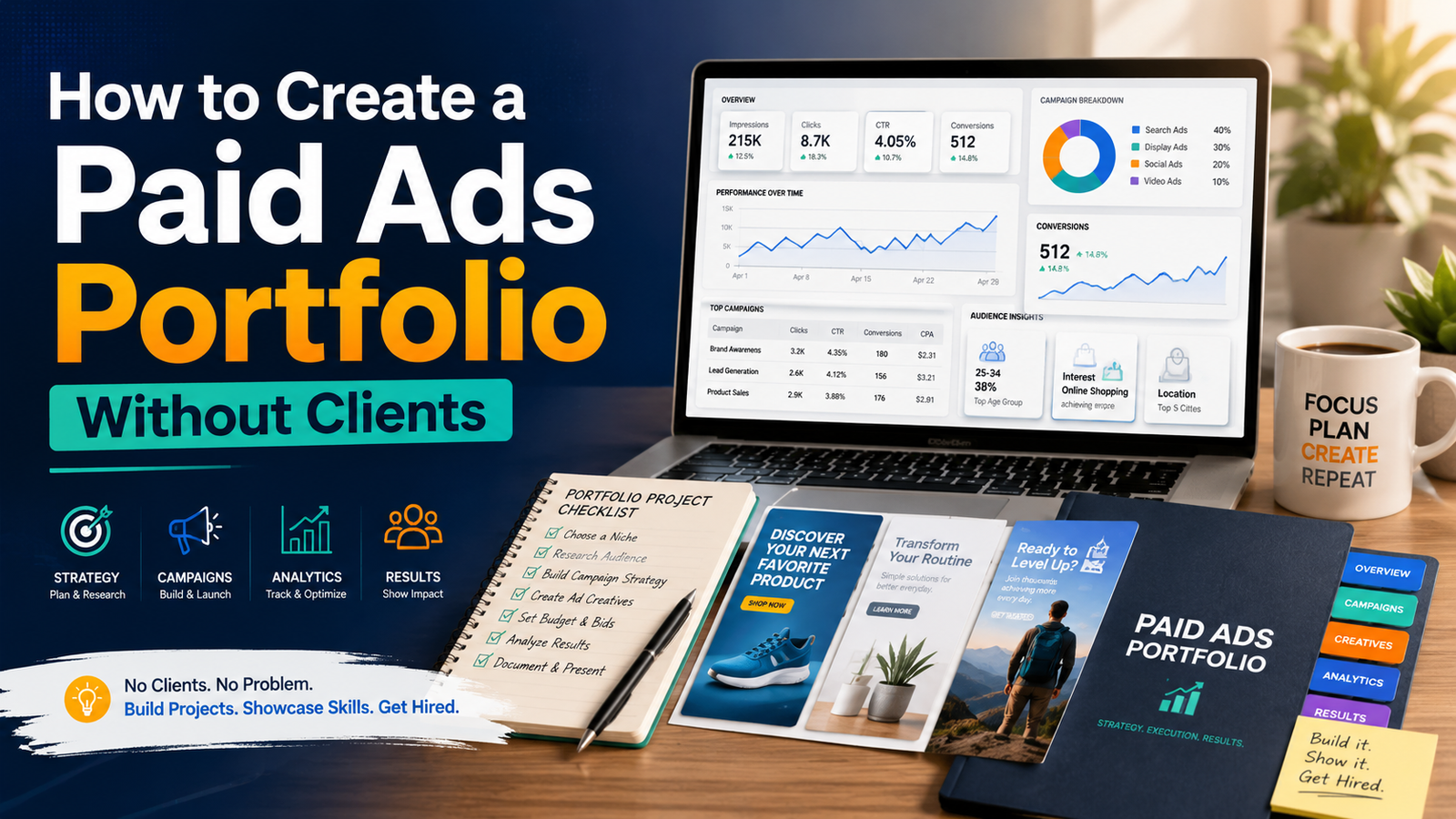
How to Create a Paid Ads Portfolio Without Clients
Introduction
Many beginners want to start paid ads freelancing, but they face one big problem: “How can I get clients if I have no experience?”
The answer is simple. You need a paid ads portfolio.
A paid ads portfolio is proof that you understand paid ads, campaign strategy, audience targeting, ad copy, creatives, and basic reporting. You do not always need real clients to build your first portfolio. You can create sample projects, mock campaigns, and practice case studies to show your skill.
In this guide, you will learn how to create a paid ads portfolio without clients, step by step.
What is a Paid Ads Portfolio?
A paid ads portfolio is a collection of your work that shows what you can do as a paid ads freelancer or marketer.
It can include:
- Sample campaign plans
- Audience research
- Ad copy examples
- Creative ideas
- Campaign structure
- Budget plan
- Mock reports
- Case studies
- Screenshots of practice work
In simple words, your portfolio tells clients, “I may be new, but I understand how paid ads work.”
Why Do You Need a Paid Ads Portfolio?
Clients do not hire only because you say, “I can run ads.” They want proof.
A paid ads portfolio helps you:
- Build trust
- Show your skills
- Look professional
- Get your first client
- Explain your process
- Stand out from other beginners
- Show that you can think like a marketer
Even if you have no paid project, a good portfolio can make you look serious and prepared.
Can You Build a Portfolio Without Clients?
Yes, you can build a paid ads portfolio without clients. This is one of the best ways for beginners to start.
You can create practice campaigns for imaginary businesses or real businesses as sample projects.
For example, you can create a paid ads plan for:
- A clothing brand
- A local salon
- A restaurant
- A coaching institute
- A real estate business
- A Shopify store
- A fitness product
- A mobile accessories shop
You do not need to run actual ads in the beginning. You can create the strategy, audience plan, ad copy, creatives, and expected report format.
What Should You Include in a Paid Ads Portfolio?
A strong paid ads portfolio should show your complete thinking process.
Here are the main parts:
1. Business Overview
Start with a short description of the business.
Example:
“This sample campaign is for a local clothing brand that wants more WhatsApp orders from customers in Lahore.”
2. Campaign Goal
Mention the goal of the campaign.
Examples:
- Get leads
- Get WhatsApp messages
- Increase website traffic
- Sell products
- Promote a course
- Get store visits
3. Target Audience
Explain who the ad is for.
Include:
- Location
- Age group
- Gender
- Interests
- Customer problem
- Buyer behavior
4. Ad Copy
Write 2 to 3 ad copy examples.
A good ad copy includes:
- Hook
- Problem
- Benefit
- Offer
- Call to action
5. Creative Direction
Explain what image or video should be used.
For example:
“Use a clean product video showing the dress, price, fabric quality, and limited-time discount.”
6. Budget Plan
Add a simple budget plan.
Example:
“Test 3 ad creatives with Rs. 1,000 per day for 5 days. After testing, spend more on the best-performing ad.”
7. Mock Results Report
Create a simple sample report format.
Include:
- Reach
- Impressions
- Clicks
- CTR
- CPC
- Leads
- Cost per lead
- Result summary
This shows clients that you know how to read campaign performance.
Step-by-Step Guide to Create a Paid Ads Portfolio
Follow this simple roadmap.
Step 1: Choose One Business Type
Pick one niche first. Do not create random projects.
Good beginner niches:
- Clothing
- Beauty products
- Restaurants
- Institutes
- Real estate
- Shopify stores
- Local services
Choose a niche you understand easily.
Step 2: Create a Sample Business Profile
Write a short business profile.
Example:
“ABC Clothing is a small online clothing brand in Pakistan. The business wants to get more orders through Facebook and Instagram Ads.”
This makes your project look real and organized.
Step 3: Define the Campaign Objective
Choose one campaign objective.
For example:
- Lead generation campaign
- WhatsApp message campaign
- Website traffic campaign
- Sales campaign
- Brand awareness campaign
Do not mix too many goals in one project. One campaign should have one clear goal.
Step 4: Plan the Target Audience
Write who you will target.
Example:
Location: Lahore, Karachi, Islamabad
Age: 18–35
Gender: Women
Interests: Fashion, online shopping, clothing brands
Goal: Get WhatsApp orders for new summer collection
This shows that you understand audience targeting.
Step 5: Write Ad Copy Examples
Create 2 to 3 ad copies.
Example:
Ad Copy 1:
“Looking for stylish summer outfits? Explore our new collection and order directly on WhatsApp. Limited stock available.”
Ad Copy 2:
“Upgrade your wardrobe with trendy Pakistani fashion. Message us now to see prices, sizes, and delivery details.”
Keep your copy simple and benefit-focused.
Step 6: Create Basic Ad Creative Ideas
You do not need advanced graphic design at the start. You can create simple Canva mockups or describe the creative idea.
Example creative ideas:
- Product image with price
- Short video showing product details
- Before-and-after style ad
- Customer review ad
- Offer-based banner
- Carousel ad showing multiple products
Add screenshots or Canva designs to your portfolio if possible.
Step 7: Create a Campaign Structure
Show how the campaign will be organized.
Example:
Campaign: WhatsApp Messages
Ad Set 1: Women 18–24
Ad Set 2: Women 25–35
Ad 1: Product image
Ad 2: Product video
Ad 3: Offer banner
This makes your portfolio look professional.
Step 8: Add a Mock Report
Create a sample report table.
Example:
| Metric | Result |
|---|---|
| Reach | 12,000 |
| Clicks | 450 |
| CTR | 2.8% |
| Leads | 65 |
| Cost per Lead | Rs. 95 |
| Best Ad | Product Video |
Make it clear that it is a sample or mock report.
Paid Ads Portfolio Project Ideas
Here are some portfolio ideas you can create without clients:
1. Facebook Ads Plan for a Clothing Brand
Goal: WhatsApp orders
Platform: Facebook and Instagram
Focus: Product photos, offer, and audience targeting
2. Lead Generation Campaign for a Coaching Institute
Goal: Student admissions
Platform: Meta Ads
Focus: Lead form, course benefits, and location targeting
3. Google Ads Plan for a Local Dentist
Goal: Appointment bookings
Platform: Google Search Ads
Focus: Search keywords and local intent
4. Shopify Store Sales Campaign
Goal: Ecommerce sales
Platform: Meta Ads
Focus: Product ads, retargeting, and landing page
5. Real Estate Lead Campaign
Goal: Property leads
Platform: Facebook Ads
Focus: Location, budget range, and lead forms
These sample projects can become your first paid ads portfolio.
Where to Share Your Portfolio
You can create and share your portfolio using:
- Google Drive
- Canva PDF
- Notion page
- Behance
- LinkedIn featured section
- Personal website
- Fiverr gig gallery
- Upwork portfolio section
For beginners, a simple Canva PDF or Google Drive folder is enough.
Common Mistakes Beginners Make
Avoid these mistakes when creating your paid ads portfolio.
1. Only Showing Screenshots
Screenshots are not enough. Explain your strategy, audience, copy, and budget plan.
2. Making Fake Results Look Real
Do not lie. If results are mock results, clearly write “sample report” or “practice project.”
3. No Clear Niche
A random portfolio looks weak. Create projects around specific businesses.
4. Ignoring Ad Copy
Paid ads need strong copy. Add multiple ad copy examples.
5. No Reporting Section
Clients want to know how you will measure results. Add a simple report format.
How Our Paid Ads Course Can Help
Creating a paid ads portfolio becomes easier when you follow a proper roadmap. Free videos can teach some topics, but they are often scattered.
Our Paid Ads Course is designed for beginners who want to learn paid ads step by step. You learn campaign setup, audience targeting, ad copy, creative strategy, testing, optimization, reporting, and freelancing direction.
The course also helps you understand how to create sample projects and build a portfolio that can help you approach clients with more confidence.
Final Advice
If you want to start freelancing, do not wait for your first client to create a portfolio. Build your paid ads portfolio using sample projects, mock campaigns, ad copy examples, creative ideas, audience research, and report formats.
A beginner with a clear portfolio looks more professional than someone who only says, “I can run ads.”
Start with one niche, create 3 to 5 sample projects, make a simple PDF portfolio, and begin approaching small businesses.
FAQs
1. What is a paid ads portfolio?
A paid ads portfolio is a collection of sample campaigns, ad copy, audience research, creative ideas, reports, and case studies that show your paid ads skills.
2. Can I create a paid ads portfolio without clients?
Yes, you can create sample projects, mock campaigns, and practice case studies for imaginary or real businesses.
3. What should I include in a paid ads portfolio?
Include business overview, campaign goal, target audience, ad copy, creative ideas, budget plan, campaign structure, and sample report.
4. How many projects should I add to my portfolio?
Start with 3 to 5 strong sample projects in different niches like clothing, local services, Shopify stores, institutes, and real estate.
5. Where can I make my paid ads portfolio?
You can create your portfolio in Canva PDF, Google Drive, Notion, Behance, LinkedIn, Fiverr, Upwork, or your own website.

You may also like
7 Types of PPC Campaigns You Can Learn in 2026.
Types of Google Ads Explained for Beginners